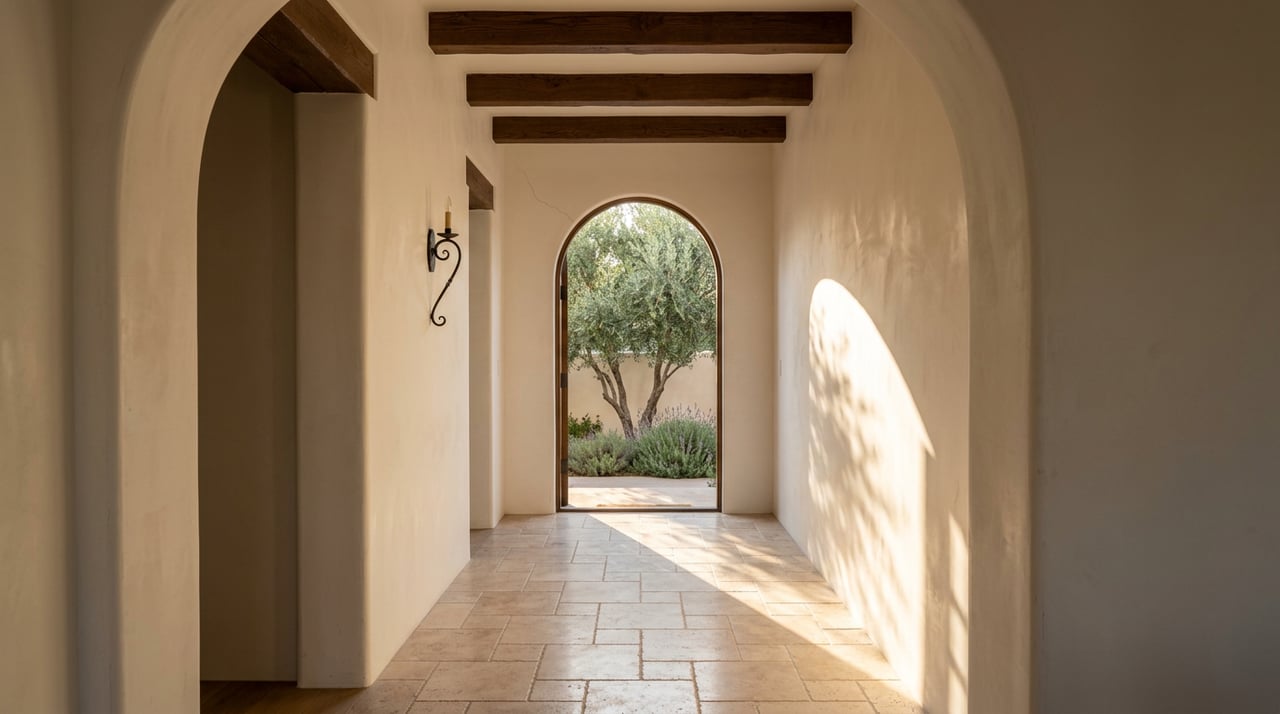
A buyer walks through escrow on a fully rewired, repiped Craftsman a few blocks off Greenleaf Avenue. The inspection came back clean. No knob-and-tube, no galvanized supply lines, no surprises in the crawlspace. Everyone assumes the hard part is over.
Then the title company flags a Natural Hazard Disclosure Statement, and the buyer's contractor asks whether repainting the porch rail a different color needs a separate review. Neither of these things has anything to do with how well the plumbing was updated. That is the part of Whittier's older housing stock that catches people off guard: the physical condition of a home and the paperwork attached to it run on two separate clocks, and updating one does nothing to shorten the other.
What the Inspection Actually Finds, by Era
Whittier's housing stock spans more than a century, and what shows up on an inspection report tracks closely with when a given block was built. A local inspection firm that works throughout the city, Trident Inspection Group, describes the range this way: 1900s and 1910s craftsman homes and 1920s and 1930s Spanish Colonial Revival stock concentrated in and around Uptown, 1950s tract construction across the flatlands, and hillside homes on the northern slopes built from the 1960s through the 2000s.
Each era carries its own predictable findings. Pre-1940 homes are the ones most likely to still carry original knob-and-tube wiring, galvanized supply piping, and post-and-pier foundations, all standard considerations for a house of that vintage. The city has identified more than 1,500 properties built before 1941, concentrated in its historic districts, which means this isn't a rare edge case. It's the baseline condition of a meaningful share of the local market.
The 1950s tract homes that fill in the flatland neighborhoods carry fewer of those specific era markers but bring their own maintenance questions, mostly around aging original systems reaching the end of a typical service life. The newer hillside construction north toward Turnbull Canyon and the Puente Hills trades wiring and plumbing concerns for a different set of issues entirely: slope stability, drainage, and partial exposure to Cal Fire hazard severity zones. None of this is unusual for a city with Whittier's range of building eras. What's useful to understand is that all of it is manageable through a normal inspection and repair negotiation. It's the next layer that surprises people.
The Historic Districts Add a Second Review, Separate From the Permit
Whittier has four locally designated historic districts, along with more than 100 individually designated historic landmarks, according to the city's own historic preservation program. Each district covers a defined area with its own predominant architecture.
| Historic District | General Area | Predominant Home Styles |
|---|---|---|
| Central Park | Around Central Park, bounded roughly by Washington Avenue, Hadley Street, and Friends Avenue | Craftsman bungalows, Queen Anne and Colonial Revival homes, several dating to the 1890s and early 1900s |
| Hadley-Greenleaf | Bounded by Greenleaf Avenue, Broadway Street, Hadley Street, and Painter Avenue | Craftsman bungalows predominate, alongside Spanish and Mediterranean revival homes |
| College Hills | South side of Bailey Street, Ridge Road, Philadelphia Street, Bryn Mawr Way, Hillside Lane, and Worsham Drive, near Whittier College | Spanish Revival, Colonial Revival, Mission Revival, Tudor, and California Ranch |
| Earlham | A smaller cluster along Earlham Drive | Early 20th century residential, smaller in scale than the other three districts |
According to Cali ADU, if a parcel sits inside one of these districts, exterior changes, from a fence to a window replacement to a repainted porch rail, generally require a Certificate of Appropriateness before a standard building permit is issued. This review process exists alongside the permit, not instead of it, and it applies whether the home was rewired last year or has never been touched. A homeowner who fully modernized the electrical and plumbing in a Hadley-Greenleaf bungalow still needs that additional sign-off to change something visible from the street.
One nuance worth knowing before you start searching by neighborhood name: Uptown Whittier itself, the commercial core along Philadelphia Street and Greenleaf Avenue, is not a residential historic district. The four districts sit in and around it, which is part of why the area reads as historic even where a specific address falls outside a designated boundary.
The Fault Zone Disclosure Has Nothing to Do With the Home's Age
Separate from any of the above, The California Geological Survey says California's Natural Hazard Disclosure Statement requires sellers to disclose whether a property sits inside a mapped Alquist-Priolo earthquake fault zone. The active trace tied to this requirement in Whittier runs along the city's northern and eastern edge, in the Puente Hills foothills, part of the broader fault system that produced the 1987 Whittier Narrows earthquake. That event caused Mercalli intensity VIII, or "Severe," shaking concentrated in Whittier's historic uptown core, the highest intensity recorded anywhere during that earthquake, and it's the reason the city formed a Historic Resources Commission afterward to manage rebuilding and preservation decisions together.
The disclosure asks a simple either-or question about location: does this parcel sit inside a mapped fault zone, yes or no. The answer doesn't change based on how old the house on it happens to be.
A brand new build finished this year on a parcel inside the mapped zone carries the same disclosure obligation as a 1920s bungalow two blocks away that sits outside it. This is the part of the two-clocks idea that trips up buyers moving from areas without this kind of mapping: the fault zone disclosure isn't a verdict on the home's condition or a red flag about its age. It's a location fact, and it shows up in the paperwork regardless of what the inspector found.
Why the Timing Matters Right Now
As of August 2026, tracked closings put Whittier's median sale price at roughly $885,000 over the prior six months, with the middle half of sales landing between $750,000 and $1,125,000, a spread wide enough that the citywide number alone won't tell a buyer or seller much about a specific block. Earlier in the year, market trackers showed a tight, competitive environment: around four months of supply in March 2026, a sale-to-list ratio above 101%, and homes selling in roughly a month or so depending on the source and the time window measured.
None of that changes the two separate clocks described above, but it does change how much slack anyone has to discover them late. In a market where well-priced listings draw multiple offers within weeks, a buyer who doesn't ask about historic district status or fault zone disclosure until midway through escrow is the one most likely to lose time they didn't budget for. The physical condition of an older Whittier home is something an inspection will surface on schedule. The paperwork layered on top of it needs to be asked about before an offer goes in, not discovered afterward.
Before You Write the Offer
- Confirm whether the parcel sits inside Central Park, Hadley-Greenleaf, College Hills, or Earlham before assuming any exterior change is a simple permit.
- Read the Natural Hazard Disclosure Statement for fault zone status regardless of the home's construction date.
- If you're looking at pre-1941 stock, ask specifically about knob-and-tube wiring and galvanized supply piping even when a listing says "updated."
- If you're looking north toward the hillside tracts, ask about slope stability and wildfire hazard severity zone status as its own separate question from any earthquake disclosure.
- If exterior work is part of your plan for a historic district property, build Certificate of Appropriateness review time into your schedule on top of the standard permit timeline.
A Few Common Questions
Does a fully rewired or repiped historic home still need to disclose its original construction details? The physical systems themselves aren't what triggers the historic district review or the fault zone disclosure. Those are separate from whatever repairs have already been made. A seller's disclosure obligations around the Natural Hazard Disclosure Statement are tied to the parcel's location, not the age or condition of what's built on it.
Does sitting inside a fault zone mean a home is unsafe? The disclosure requirement exists to inform a buyer, not to rate the property. It reflects location relative to a mapped active fault trace, not an assessment of the specific structure's condition.
What should I confirm before planning exterior work on a historic home? It's worth confirming with the city's Planning Services division before assuming any exterior project is a simple permit.
Coordinating an older Whittier home through inspection, disclosure, and closing is exactly the kind of transaction where having one team track all three pieces together helps. Wasilik Klimenko has spent decades working through Whittier's mix of historic and modern housing stock, with in-house support that carries a deal from the first walkthrough to the closing table. If you're weighing a purchase or thinking about listing an older home in Whittier, start with a Get a Free Home Valuation to see where your property stands before you write or accept an offer.
This article is general information, not legal, tax or financial advice. Consult a qualified professional about your situation.